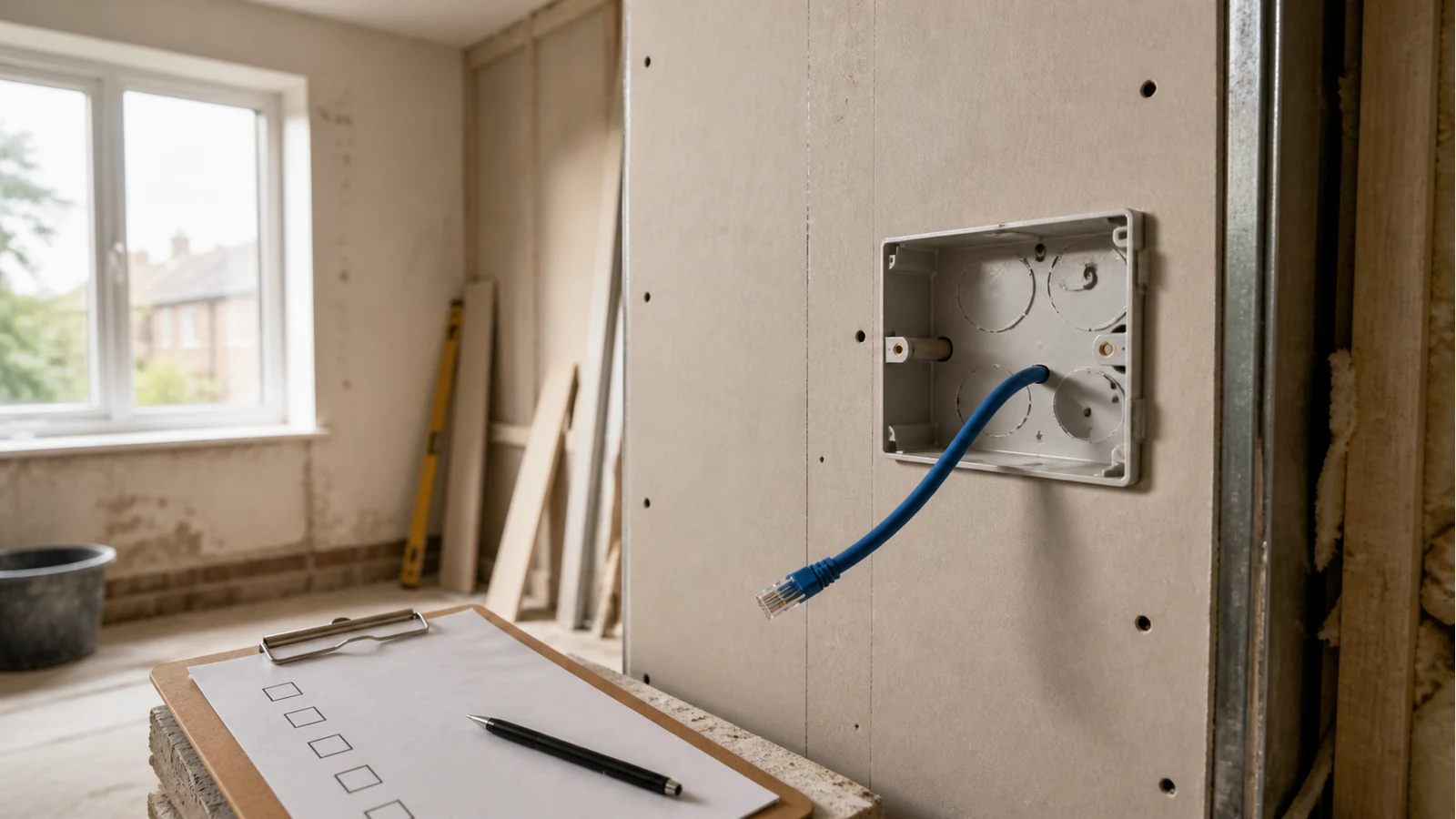
Pre Plaster Cat6 Test Checklist Uk
Direct answer: before plasterboard, skim or final decoration, run three checks on every Cat6 drop: wiremap both ends, record an approximate length or fault-distance sanity check, and label plus photograph both ends. Those three habits catch the common expensive mistake: discovering a dead study socket after the wall is finished.
This checklist is for domestic renovation, small rental refits and garden-office runs. It is not a replacement for formal certification where a commercial contract demands a pass report.
The three checks
- Wiremap every drop. Connect the main tester and remote, then confirm the expected pin order before the cable disappears behind finished surfaces. A wiremap tester explanation shows why this catches opens, shorts and wiring mistakes early.
- Record length sanity. Compare the tester's approximate length or distance-to-fault reading with the route you actually installed. If a 20 metre loft route reports a very short open, inspect the nearest termination before boarding.
- Label and photograph. Mark room, wall plate and panel end with the same ID, then take photos before the wall is closed.
Optional fourth check for PoE plans
If the run will feed CCTV, a ceiling access point or another PoE device, check the design before plaster: expected device power, switch location, cable route and weather exposure. Do not wait until the camera is on the soffit to discover the switch budget or cable path is wrong.
When length helps before plaster
Distance-to-fault is useful because the cable is still physically reachable. UK TDR category pages such as this Test Meter TDR fault locator overview explain why reflected signals can indicate fault distance on metallic cables. In a renovation, that can mean re-punching a backbox now instead of cutting finished plaster later.
Labelling is part of the test
Technical tracing guidance, including Fluke Networks cable tracking methods, repeatedly comes back to identification. A tested cable that is not labelled becomes tomorrow's mystery cable.
Stop conditions
Stop and bring in a qualified installer if the cable route is near mains electrical work, if the client requires a formal Category certification report, or if repeated re-termination leaves the same hidden fault. Do not bury an unresolved result and hope the router will sort it out later.
Conditional next step
If you are checking several domestic Cat6 drops yourself and need one kit for wiremap, tracing and PoE-aware troubleshooting, compare the 5-in-1 network cable tester PoE checker. It is relevant when a practical verifier is enough; it is not the right substitute for a formal certifier.
Related next read
If a room socket already reports dead, use the open vs short Ethernet fault guide to decide where to re-terminate first.